 Subscription box




Your bag is empty


Posted: 28 April 2026
5 Minute ReadBest Korean Sunscreens 2026: 9 SPFs by Skin Type

Korean SPF used to be a well-kept secret. Now it's the entire conversation, and somewhere between the TikToks, the trending ingredients, and the 47 different "best Korean sunscreen" lists, choosing one has become genuinely overwhelming.
Here's the truth: in 2026, SPF isn't optional and it isn't seasonal. It's the most powerful anti-ageing, anti-pigmentation, anti-inflammation step in your routine, and Korean formulas have spent the last decade quietly making it the most pleasant one too. Lightweight, glowy, fragrance-free, makeup-friendly, no white cast. The good ones don't feel like sunscreen at all.
But here's where most guides get it wrong. They hand you a list of products without asking what your skin actually needs. So before we get to the Edit, let's talk about how people are really shopping for SPF this year.
spf is the step you choose carefully, because the right korean sunscreen does the work of three products in one.
the three questions to ask before you buy
Each product card in the Edit below has the same three labels: Best for skin type, Tackles concern, and Bonus benefits. Answer the three questions below and you'll know exactly which SPF to pick from the matrix.
1. what's your skin type, really?
Oily, dry, combination, sensitive, normal, or "behaves itself most days but flares up sometimes"? K-beauty SPFs are formulated with much more nuance than Western ones, so picking the right base matters. If you're not sure, default to combination, the most forgiving category. Match your answer to the "Best for skin type" label on each card.
2. what's your biggest skin concern?
Dehydration, redness, breakouts, dullness, fine lines, excess shine, pollution exposure, or just "I forget to reapply"? Your most-pressing concern should be the deciding factor between two SPFs that both suit your skin type. Match your answer to the "Tackles concern" label.
3. what else do you want it to do?
Brighten? Calm? Strengthen your barrier? Add a glow? Almost every Korean SPF on this list pulls double duty, and the bonus benefit is what turns a good pick into the right pick for you. Match your answer to the "Bonus benefits" label.
the spf edit
9 Korean sunscreens, sorted by what your skin needs
Every product below is Skin Cupid tested, popularity-ranked, and loved by our community. Click any card to shop.
1

2

3

4

5

6

7

8

9

If you only buy one this year, make it this.
Best for skin typeAll skin types
Tackles concernHydration + barrier
Bonus benefitsBrightening, soothing
SKIN1004
Madagascar Centella Hyalu-Cica Water-Fit Sun Serum SPF50+ PA++++ (50ml)
Voted our No.1 Suncream with 143 reviews. A watery, weightless serum SPF that disappears into skin and plays beautifully under makeup.
£16
Shop now ›
The semi-matte all-rounder for skin that gets shiny.
Best for skin typeOily, combination
Tackles concernExcess shine, large pores
Bonus benefitsBarrier-strengthening, no white cast
PURITO
Daily Soft Touch Sunscreen SPF50+ PA++++ (60ml)
Designed by PURITO's community for real-world skin. Five ceramides, panthenol, and centella keep the barrier happy. Particularly loved by reviewers with deeper skin tones.
£16
Shop now ›
The dewy-finish dream.
Best for skin typeDry, dehydrated
Tackles concernTight, flaky skin
Bonus benefitsGlassy, dewy finish
DR CEURACLE
Hyal Reyouth Moist Sun SPF 50 PA++++ (50ml)
A genuinely hydrating chemical SPF that melts into thirsty skin. If your skin feels tight by lunchtime, this is your fix.
£19.95
Shop now ›
The forgiving classic.
Best for skin typeSensitive, reactive
Tackles concernRedness, easily irritated
Bonus benefitsMineral filter, fragrance-free
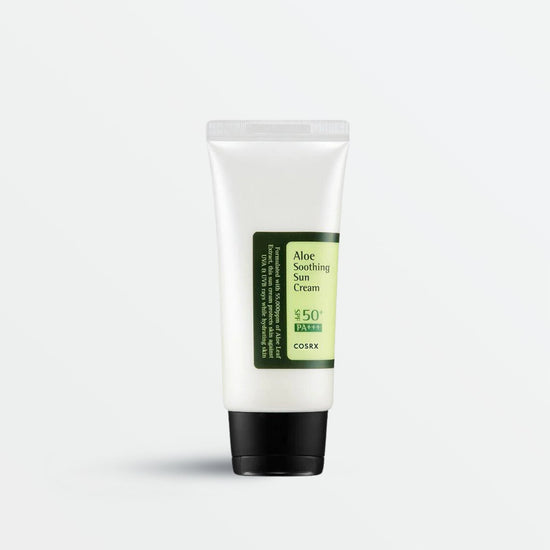
COSRX
Aloe Soothing Sun Cream SPF50+ PA+++ (50ml)
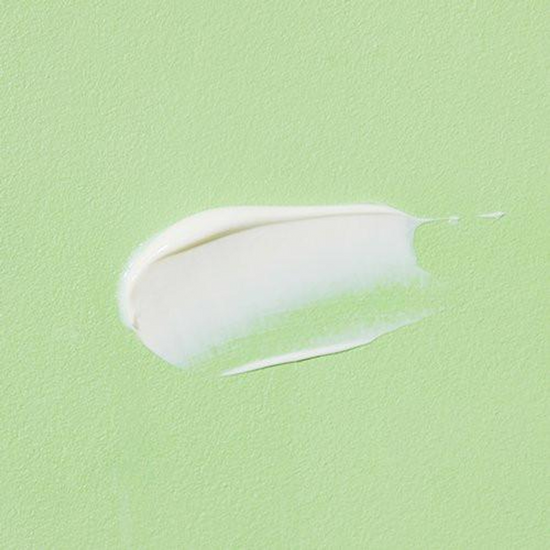
63 reviews, gateway K-beauty status, and a price that lets you stock up. Aloe vera plus mineral filters make it kind to reactive skin and a brilliant first Korean SPF.
£15
Shop now ›
Calming protection for skin that flares up easily.
Best for skin typeSensitive, blemish-prone
Tackles concernInflammation, breakouts
Bonus benefitsHeartleaf calming, lightweight
ANUA
Heartleaf Silky Moisture Sun Cream SPF50+ PA++++ (50ml)
Heartleaf (houttuynia cordata) is K-beauty's calming powerhouse for 2026. ANUA's silky cream soothes inflammation while protecting.
£14.99
Shop now ›
Two-in-one defence for city dwellers.
Best for skin typeCombination, urban skin
Tackles concernPollution, dullness
Bonus benefitsPollution defence, semi-matte
PURITO
Wonder Releaf Centella Daily Sun Lotion SPF50+ PA++++ (60ml)
A lighter lotion finish with PURITO's signature centella complex. UV plus pollution defence in a single step. Sits weightlessly under makeup.
£16
Shop now ›
The on-the-go reapplication essential.
Best for skin typeAll skin types
Tackles concernForgetting to reapply
Bonus benefitsStick format, makeup-friendly
ABIB
Quick Sunstick Protection Bar SPF50+ PA++++ (22g)
Glides over makeup without disturbing it, with a transparent finish (no white cast) and packed with centella, aloe, and ceramides. The single best SPF habit upgrade you can make.
£22
Shop now ›
The plumping cult favourite.
Best for skin typeNormal, dry
Tackles concernDullness, lack of glow
Bonus benefitsBirch sap brightening, plumping
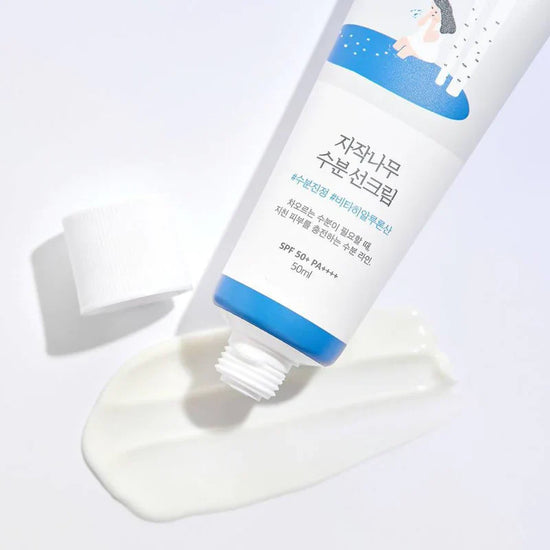
ROUND LAB
Birch Juice Moisturizing Sun Cream SPF50+ PA++++ (50ml)
89 reviews can't be wrong. Birch sap is one of 2026's most-watched hanbang ingredients, naturally hydrating, mineral-rich, and brilliant for plump, dewy skin.
£19
Shop now ›
The fresh launch worth trying.
Best for skin typeNormal, mature
Tackles concernLoss of bounce, fine lines
Bonus benefitsFermented bean nourishment
MIXSOON
Bean Sun Serum (50ml)
Already a Cherub Beauty Awards winner. A fermented bean serum-meets-SPF that nourishes while it protects, with a satin finish that feels more like a treatment than a sunscreen.
£18
Shop now ›
frequently asked questions
do i really need spf indoors?
Yes, and here's why. UVA rays (the ones responsible for ageing and pigmentation) pass through window glass. If you sit near a window, work from home next to natural light, or commute, you're getting daily UVA exposure that adds up over years. SPF is your single best longevity investment.
chemical or mineral, which is better?
Neither is better; they're different. Chemical SPFs (most Korean ones) absorb UV like a sponge, giving you a lightweight feel, no white cast, and a perfect base under makeup. Mineral SPFs (zinc oxide, titanium dioxide) sit on top and reflect UV, which is better for very sensitive skin and post-procedure use, but can leave a slight cast. Many K-beauty formulas blend both.
why korean spf specifically?
Korean SPF formulas are years ahead of most Western ones in terms of texture, finish, and skincare benefits. Korea's regulatory framework treats SPF as a quasi-drug, requiring rigorous testing, and Korean consumers expect SPF to feel like skincare, not like sunscreen. The result: lightweight, multi-tasking formulas at accessible prices.
what does pa++++ mean?
PA stands for Protection Grade of UVA. The plus signs indicate strength: PA+ is some protection, PA++++ is the highest available. SPF measures UVB protection (the rays that burn); PA measures UVA protection (the rays that age). You want both. Almost every Korean SPF in our Edit is SPF50+ PA++++, the gold standard.
can i use the same spf on my body?
Technically yes, but most face SPFs are too expensive to justify. Use a dedicated body sunscreen for arms, legs, and torso, and save your face SPF for your face, neck, and the back of your hands (the most tell-tale ageing zone).
how long does an open spf last?
Most Korean SPFs are good for 12 months after opening (look for the small "12M" symbol on the packaging). After that, the active filters degrade and protection drops. If you're wearing SPF daily, as you should be, a 50ml tube lasts roughly 2 to 3 months, so freshness isn't usually an issue.