 Subscription box




Your bag is empty


Posted: 20 April 2023
3 Minute ReadBanish Acne Scars for Good: The 6 K-beauty Products to Treat Acne Scars
Seeing acne scars on the face in the mirror is unpleasant, but there's a way to get rid of them with good skincare! We are answering common questions about acne scar treatment, and introducing 6 K-beauty effective products with our top skincare tips! Let's deep dive into the acne scar conversation!
how to actually fade acne scars, according to K-beauty
The breakout is gone. The mark it left behind has been sitting there for three months. Sound familiar?
Post-acne marks are one of the most common skincare frustrations there is, and also one of the most misunderstood. Most people either throw everything at them at once (counterproductive) or resign themselves to just waiting it out (slower than it needs to be). The K-beauty approach is neither: it's consistent, targeted care that works with your skin's natural healing process.
Here's what actually works.
first, know what you're dealing with
Not all post-acne marks are the same.
Post-inflammatory hyperpigmentation (PIH) shows up as flat, darkened patches. These are caused by excess melanin produced in response to inflammation. Very common, especially in deeper skin tones, and very responsive to the right skincare.
Post-inflammatory erythema (PIE) appears as flat pink or red marks. These are vascular, caused by dilated blood vessels near the skin's surface. More common in lighter skin tones, and they respond well to calming and barrier-supporting ingredients.
Atrophic scars are the indented kind: icepick, boxcar, rolling. These involve collagen loss and are structurally different from PIH and PIE. Skincare can improve their appearance over time, but deeper atrophic scarring often benefits from professional treatment alongside a dedicated routine.
Most of us are dealing with PIH and PIE. That's where skincare genuinely shines.
the routine that actually moves the needle
Cleanse gently. A low-pH, non-stripping cleanser is the foundation. Barrier disruption slows healing, so this step matters more than people think. Look for pH 5 to 5.5 and nothing that leaves your skin feeling tight.
Try: HARUHARU WONDER Black Rice Moisture 5.5 Soft Cleansing Gel (100ml) — £14.00
Exfoliate, but not obsessively. Chemical exfoliants (AHA for surface brightening, BHA for pore clarity, PHA for gentler cell turnover) speed up the rate at which pigmented cells leave the skin. Two to three times per week is enough. Over-exfoliation causes inflammation, which makes pigmentation worse. If you're new to acids, once a week is the right place to start.
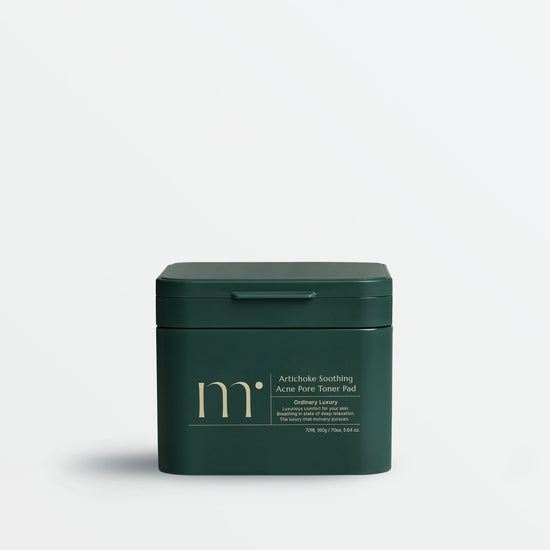
Try: ANUA Heartleaf 77% Clear Pad (70pcs) — £21.95
Add Vitamin C. Vitamin C is one of the most researched brightening ingredients available. It inhibits melanin production, supports collagen synthesis, and delivers a noticeable improvement in overall skin radiance. Use a stable vitamin C serum in the morning, always under SPF.
Try: PURITO Pure Vitamin C Serum (60ml) — £16.99
Layer in Niacinamide. Niacinamide (vitamin B3) fades both PIH and PIE, reduces redness, regulates sebum production, and strengthens the skin barrier. It works well alongside most other actives, which makes it incredibly easy to incorporate. It's everywhere in K-beauty for good reason.
Try: ANUA Niacinamide 10% + TXA 4% Dark Spot Correcting Serum (30ml) — £21.95
Bring in the calming actives. If your skin is still breaking out alongside old marks, centella asiatica and heartleaf are your best allies. Centella reduces inflammation and supports collagen repair. Heartleaf is antibacterial and deeply soothing. Both are safe for daily use, even on sensitive skin.
Try: MIXSOON Soondy Centella Asiatica Essence (100ml) — £24.00
Wear SPF every single day. UV exposure darkens existing hyperpigmentation and significantly slows the fading process. Without daily SPF, even the best brightening routine is working at a fraction of its potential. SPF 50 PA++++ is the standard. Reapply if you're spending time outdoors.
Try: SKIN1004 Madagascar Centella Hyalu-Cica Water-Fit Sun Serum SPF50+ PA++++ (50ml) — £16.00
a note on timelines
Most PIH and PIE begin to visibly improve within 8 to 12 weeks of a consistent routine. Deeper pigmentation can take longer. The temptation to constantly switch products or add new ones is real, but it resets your progress. Pick your routine, stick with it, and let it work.
If atrophic scarring hasn't improved after six months of dedicated skincare, a dermatologist can advise on additional options. Skincare is powerful, but it has its limits.
FAQ
What fades acne scars most effectively? Vitamin C, Niacinamide, and gentle AHA exfoliants used consistently, always paired with daily SPF.
How long does it take for acne marks to fade? Most PIH and PIE begins to improve in 8 to 12 weeks. Deeper marks can take 3 to 6 months of consistent care.
Can Vitamin C and Niacinamide be used together? Yes. Despite a persistent myth, they're compatible and are commonly combined in Korean skincare formulas.
Does sunscreen actually help acne scars fade? It's essential. UV exposure worsens pigmentation and slows the natural fading process significantly.